
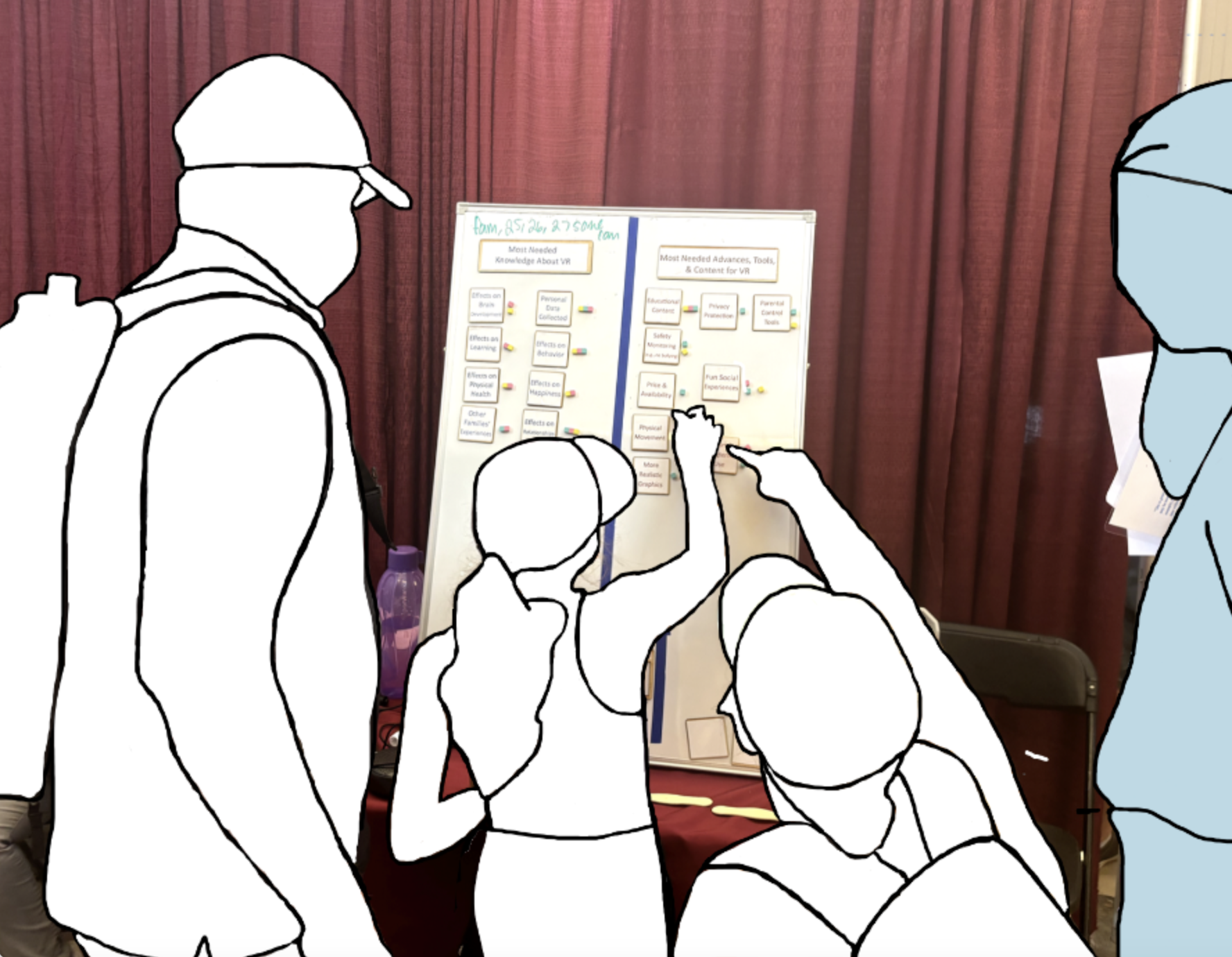
As technology plays a growing role in children's lives, incorporating their perspectives is crucial for shaping future research and design. This paper introduces a lightweight technique, called Stakeholder-Informed Prioritization (SIP), designed to help child-involved groups quickly get informed about and prioritize research and design directions. We demonstrate the use of SIP through a case study focused on Virtual Reality (VR), a technology that is rapidly gaining popularity among younger users but remains under-explored from their point of view. We piloted SIP with 34 groups of children (aged 8 to 18) and their families during a community event. Our results show that participants in these groups can successfully complete SIPs and are generally satisfied with the results.
Stakeholder-Informed Prioritization (SIP): A Technique for Quickly Gauging Research and Design Priorities
Abstract
Summary
SIP is a quick, structured activity that lets children and families weigh in on which research and design questions matter most to them -- giving young people a real voice in shaping the technology they use. Tested with 34 family groups at a community event focused on VR, the technique proved easy to run and produced priorities that participants found meaningful.