
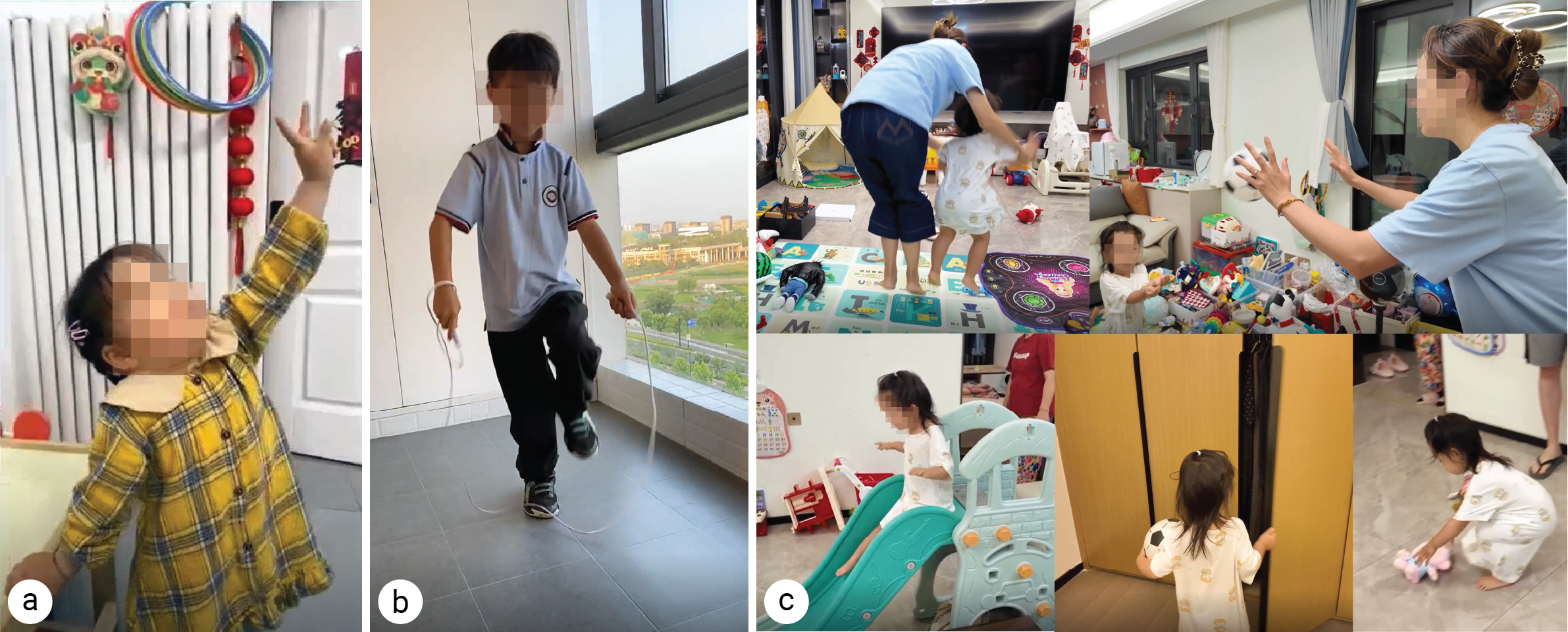
Physical activity play (PAP) is essential for children's physical, cognitive, and social development. However, constraints such as limited space, parental availability, and social and physical incidents make domestic PAP a substitute for outdoor play. Given the varied forms of AI, the diverse stages of child development, and the complexity of parent-child dynamics, it is critical to understand how AI influences PAP in the domestic context. This research investigates how children engage with AI for PAP at home and how parents participate in these interactions. Through a small-scale pilot study with three families, we examine the forms of AI-supported PAP, parental roles, challenges to children's agency in relation to parents and AI, and limitations of current AI systems.
Jump, Stop, Jump Again: Exploring AI-Supported Physical Activity Play at Home with Parents and Children
Abstract
Summary
This paper examines how AI tools can help children stay physically active at home by guiding movement-based play, and how parents fit into these interactions. A pilot study with three families reveals the different roles AI and parents take on during active play sessions, along with tensions around children's autonomy and current limitations of AI-driven physical activity systems.